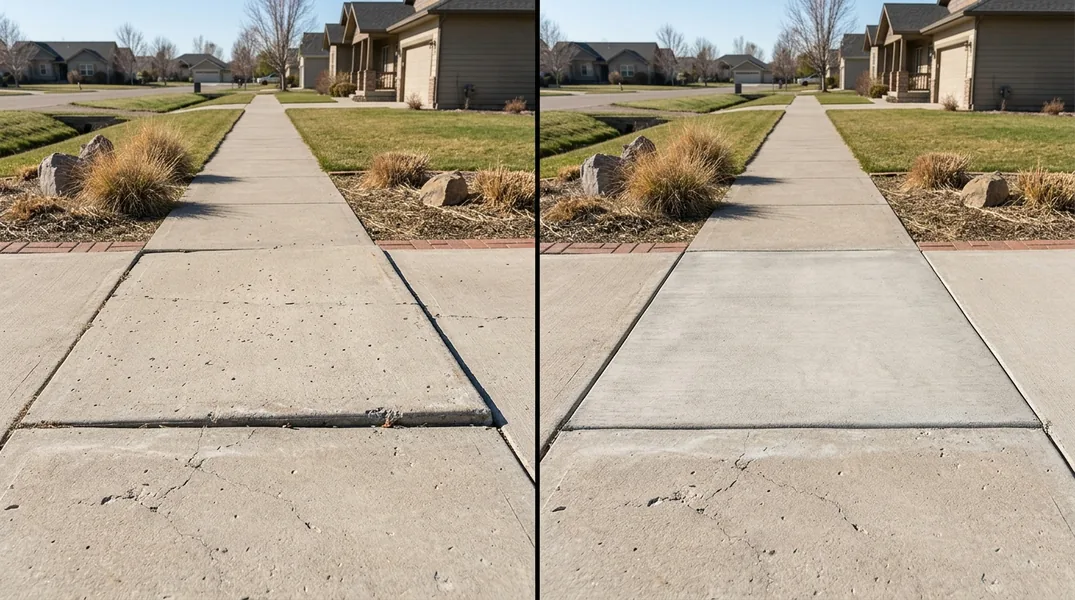
Understanding Boise's Unique Soil Composition
If you've ever wondered why your neighbor's driveway seems to hold up better than yours, or why cracks appear in seemingly random patterns across Boise properties, the answer often lies beneath the surface. The Treasure Valley sits on a complex tapestry of soil types that vary dramatically from one block to the next. This geological diversity is one of the most important factors homeowners should understand when planning a new Concrete Driveways project or addressing existing damage.
The soil beneath your home isn't uniform across Boise and the surrounding areas. Geological surveys reveal that the region contains three primary soil types: sandy loam, caliche, and clay. Each of these materials behaves differently when exposed to moisture, temperature changes, and the weight of concrete structures. Understanding these distinctions helps explain why some driveways remain pristine for decades while others develop significant issues within just a few years, even when constructed using similar materials and methods.
Sandy Loam: The Unstable Foundation Problem
Sandy loam is prevalent throughout much of Boise and presents a unique challenge for concrete installations. This soil type consists of a mix of sand, silt, and organic matter, creating a relatively loose and porous foundation. While sandy loam drains water effectively, it lacks the compaction strength needed to provide stable, long-term support for heavy concrete structures. When water percolates through sandy loam, it can create voids and settle unevenly, causing the concrete above to shift and crack.
The real problem emerges during seasonal changes. When Boise experiences freeze-thaw cycles in winter, water trapped in sandy loam expands, pushing upward against your driveway. This heaving action creates stress that concrete simply cannot withstand indefinitely. Homeowners with sandy loam foundations often notice that cracks develop in patterns that suggest differential settlement, where one section of the driveway rises or falls relative to adjacent sections. If you're experiencing this type of damage, Concrete Repair & Resurfacing may become necessary sooner than expected.
Caliche Foundation Cracking: A Hidden Culprit
Caliche is a naturally occurring mineral layer found in many parts of the Treasure Valley. This hardened calcium carbonate layer sits beneath the topsoil and acts like a shallow, impermeable barrier. While caliche's hardness might seem like an advantage, it actually creates serious problems for concrete structures. Because water cannot easily penetrate caliche, moisture becomes trapped in the soil layers above it, creating hydrostatic pressure that pushes upward against your driveway or patio.
This trapped moisture causes caliche foundation cracking in two primary ways. First, the constant pressure from water seeking drainage creates stress that concrete cannot absorb. Second, when that water freezes during Boise's cold winters, it expands with tremendous force, essentially acting as a hydraulic jack beneath your driveway. Many homeowners are surprised to learn that their concrete damage isn't caused by poor installation or cheap materials, but rather by the geological conditions hidden just a few inches below the surface. If you suspect caliche-related damage, a professional evaluation can determine whether your situation requires Concrete Repair & Resurfacing or if preventive measures might help.
Clay Soils and Concrete Damage: Expansion and Contraction
Clay soil is another common foundation type in the Treasure Valley, and it behaves very differently from sandy loam or caliche. Clay is highly expansive, meaning it absorbs water and swells significantly when wet, then shrinks and hardens when dry. This constant expansion and contraction cycle puts tremendous stress on concrete structures anchored to clay foundations. In regions with clay soils, homeowners frequently observe large, wide cracks that appear to follow a pattern, often forming in grid-like or starburst formations.
The damage from clay expansion is particularly pronounced in Boise because of the region's semi-arid climate combined with occasional heavy precipitation. When spring snowmelt or heavy rains saturate clay soils, the ground beneath your driveway expands. As summer arrives and the soil dries out, it contracts, leaving voids and causing settlement. This repetitive cycle over multiple seasons weakens the concrete's structural integrity. Some homeowners notice that their driveways develop a slight bowl shape, with the edges higher than the center, which is a classic sign of clay soil movement. Understanding this soil behavior is crucial when planning new construction or budgeting for maintenance and repairs.
How Soil Type Affects Concrete Repair Costs in Boise
The type of soil beneath your concrete directly impacts both the likelihood of damage and the complexity of repairs. A straightforward crack repair on stable soil might cost significantly less than addressing the same crack on unstable clay or caliche. When Boise Concrete evaluates a damaged driveway, one of our first steps is understanding the underlying soil conditions. This assessment helps us determine whether a simple patching solution will suffice or if more comprehensive Concrete Repair & Resurfacing is necessary.
For properties with problematic soil, preventive measures can save money in the long run. Proper drainage installation, soil stabilization, and strategic reinforcement during initial construction can reduce the likelihood of future damage. The pricing for these preventive steps is typically far less than major repairs down the road. If you're concerned about your property's soil conditions and want to understand how they might affect your concrete investment, we encourage you to reach out for a free estimate and soil assessment. Our team at Boise Concrete can provide specific recommendations based on your location and soil type.
What Boise Homeowners Should Know Before Installing New Concrete
If you're planning a new Concrete Driveways, Concrete Patios, or other concrete project in Boise, understanding your soil type should be part of the planning process. Professional contractors recognize that the best concrete installation cannot overcome poor soil preparation. Before any concrete is poured, the subgrade should be properly prepared based on the specific soil conditions present on your property.
For sandy loam soils, contractors should compact the base material thoroughly and consider adding a gravel base layer for improved drainage and stability. For properties with caliche, solutions might include breaking through the caliche layer to allow proper drainage, or installing a moisture barrier system. Clay soils often benefit from specialized drainage solutions and potentially thicker concrete slabs with reinforced steel to handle the expansion and contraction stresses. When you contact Boise Concrete at (208) 279-7695 or request a free estimate, we'll evaluate your specific soil conditions and recommend the best approach for your project. Investing time in proper site assessment before construction pays dividends in the form of a durable, long-lasting concrete surface that can withstand Boise's challenging soil and climate conditions for years to come.
Looking for a professional tree service in Boise? Boise Concrete responds fast for all your concrete needs.
Get a Free QuoteOur services: Concrete Driveways · Concrete Patios · Stamped & Decorative Concrete